SEO Studio demonstration
SEO Studio in practice: from draft to WordPress publication
SEO Studio’s WordPress test from 23 September 2026, its corrections and a public copy manually restored on 12 October, with a live link and real screenshots.
What does an article’s journey through SEO Studio look like?
During our test on 23 September 2026, a draft about green manure needed two evidence-related corrections before publication on WordPress. The final check passed 13 points, including published status, images and credits. This was our internal gardening demonstration site. It documents the product workflow, without a measured client SEO result.
How does an AI-assisted draft become an article that someone can actually read on a blog? We followed that process in SEO Studio on 23 September 2026, using a WordPress site created for testing. Its gardening business was fictional. The drafting, corrections in the administration interface and transfer to WordPress really took place.
This report draws on the drafts and records kept from that test. The topic was preparing a vegetable garden in autumn. It shows why a source must support a specific claim, and what we check after content has been published.
The starting point: a structured draft
The first draft had the French title “Septembre au potager : semer un engrais vert et préparer le sol pour le printemps” (“September in the vegetable garden: sow green manure and prepare the soil for spring”). The test record preserves a 935-word body, five sections, three frequently asked questions and two proposed illustrations. No images were attached at that stage.
That structure provided material to examine: the topic, the proposed advice, the sources and the expected illustrations. Preparation encountered an evidence-related block before producing a publishable article. A recorded recovery kept the research and draft, then performed another revision. That step identified two claims to correct.
Two corrections to align the text with its sources
The factual check flagged two claims containing numerical values that were absent from the cited passages. The issue was specific: the retained evidence did not justify those figures. Continuing required changes to the claims and their supporting passages. The SEO Studio correction form was used to make those changes.
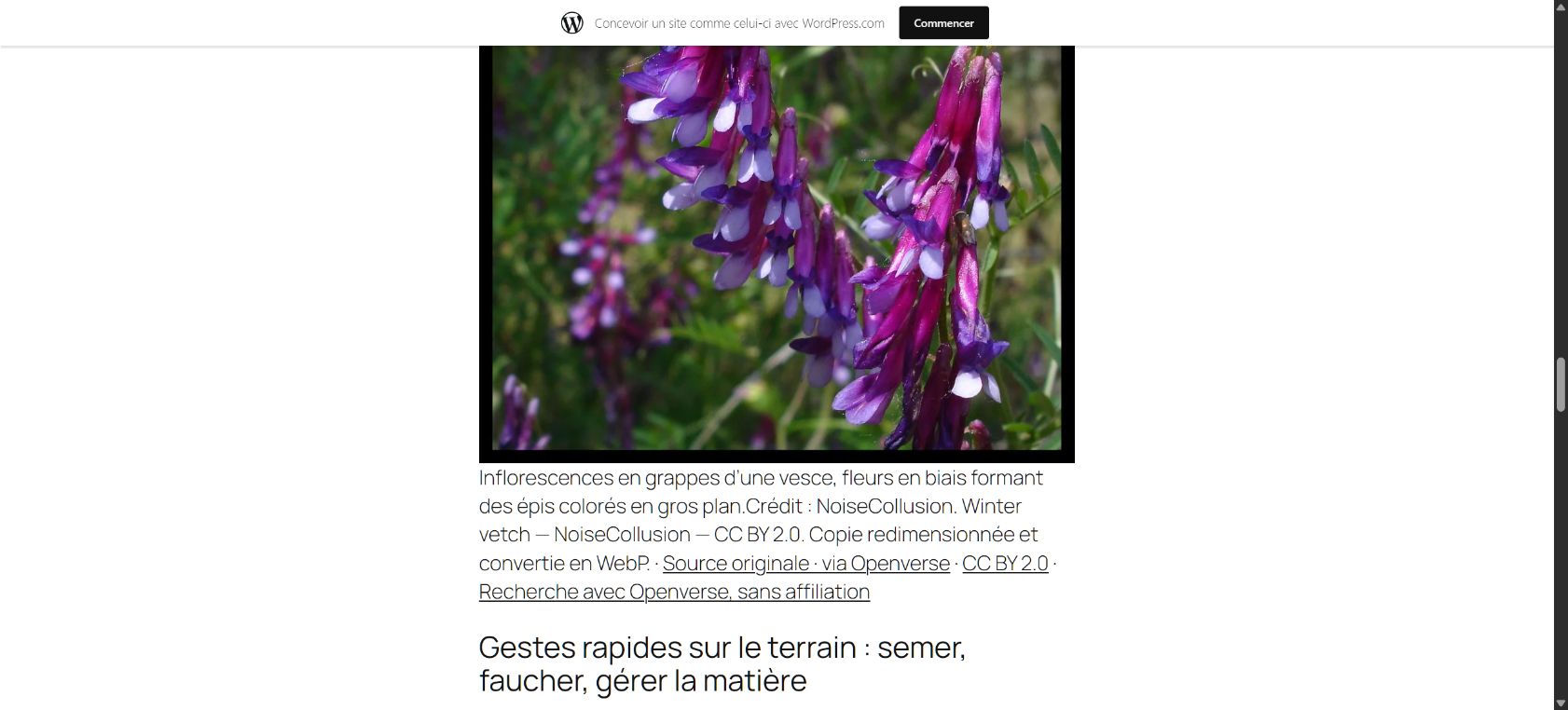
The first correction concerned vetch. The claim was narrowed to what the available passage supported: its hardiness, winter use, cutting and place before a subsequent crop. The second replaced a claim with an explanation of soil preparation, linked to the recorded passage that supported it.
These descriptions summarise the changes recorded during the test; they do not reconstruct before-and-after quotations. The practical lesson is that when a passage does not justify a detail, the text should be narrowed to what can be supported. The corrected preparation then completed its checks and the selection of two illustrations.
Permission during this agent-assisted test
The prepared article ultimately had the French title “Engrais verts d’automne et préparation du sol au potager familial” (“Autumn green manure and soil preparation for the family vegetable garden”). During this agent-assisted test, the user authorised the process to continue to publication. The agent then recorded the approvals in the provided forms after reviewing the content and checking the photographs’ original source pages.
This does not document an independent review by a person at Oryon. It demonstrates the checks and approvals in this assisted test; it measures neither the time nor the quality of a commercial human review service.
In the current offer, articles are prepared in English or French and Oryon’s human review is the default mode. The client may explicitly enable automatic checks, without systematic human review: facts, sources and both images must pass the checks before approval. Unresolved exceptions remain blocked for examination by Oryon. The client’s publishing permission is a separate consent. These current choices do not change the historical workflow described here.
The result: a checked WordPress publication
Publication completed on 23 September. The final verification passed 13 checks on WordPress and on the page available to visitors. WordPress documentation distinguishes an article’s status, content and featured image. We checked these elements alongside the actual display.
- The article was published, and only one post used the expected address.
- The page responded successfully and displayed the article title.
- The content contained nine headings, 21 paragraphs, four lists and a table of contents with eight working links.
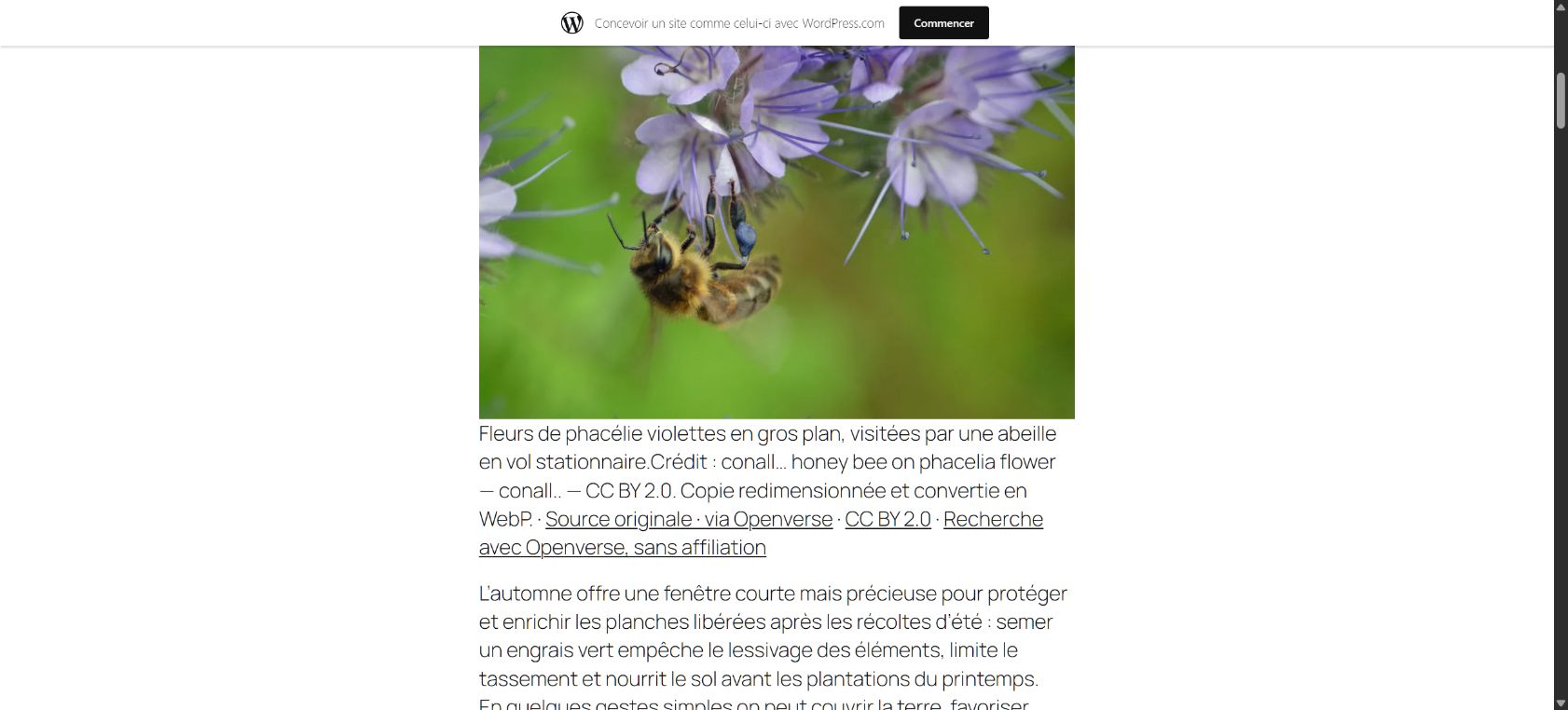
- Two different photographs loaded with their credits and CC BY 2.0 licence. WordPress also had a featured image set.
- The mobile check confirmed that images loaded and the page did not overflow horizontally.
The historical article is available again
The WordPress hosting used for this test was temporary. When checked on 1 October 2026, the old address led to the hosting service’s page and the article was no longer accessible there. This report therefore preserves a historical observation of publication, with its date and scope.
On 12 October 2026, we manually republished this content on a free WordPress.com demonstration site and checked its public page without signing in. This restoration makes the example available again; it is neither a new generation nor a new automatic publication by SEO Studio. Our plugin is not installed on this free plan.
A notice explains the restoration. Links to the old test site’s pages were replaced with links to this report and SEO Studio, while heading styles and anchors were adapted. We found the restored title and text on the public page, a single first illustration and a second distinct photograph, both loaded with their credits and CC BY 2.0 licence.
The retained records substantiate the technical workflow described here. They do not measure changes in traffic, Google rankings or business enquiries. A successful first publication also does not establish how consistently a service will perform over time.
What this example contributes to your project
For your blog, the process to examine is concrete: a relevant topic, a draft with verifiable claims, explained corrections, then a version validated under the selected mode, with your publishing permission. Illustrations should support the text and retain the information needed for their reuse.
After publication, open the article on your website and on a phone. Check its links, images and layout. This continuity between editorial preparation and the content actually published is what the SEO Studio test illustrates. Its effects on visibility then require their own measurements.
The public repository for SEO Studio’s WordPress connector contains the source code and installation and compatibility documentation, in French and English. Check these requirements against your WordPress hosting before installing the plugin.