Oryon expertise
Automation, AI and API integration
Connect your tools, automate recurring tasks and use AI where it helps your work.
Based in Givors · Rhône area and remote support across France · Project discussions in French
Your tools, connected at last.
How can we connect our tools and automate our team’s tasks?
Automation helps small businesses move data between tools and handle recurring tasks. We map flows, check APIs and implement the agreed connectors. AI can assist a defined task with appropriate human validation and documented recovery procedures.
A project in context
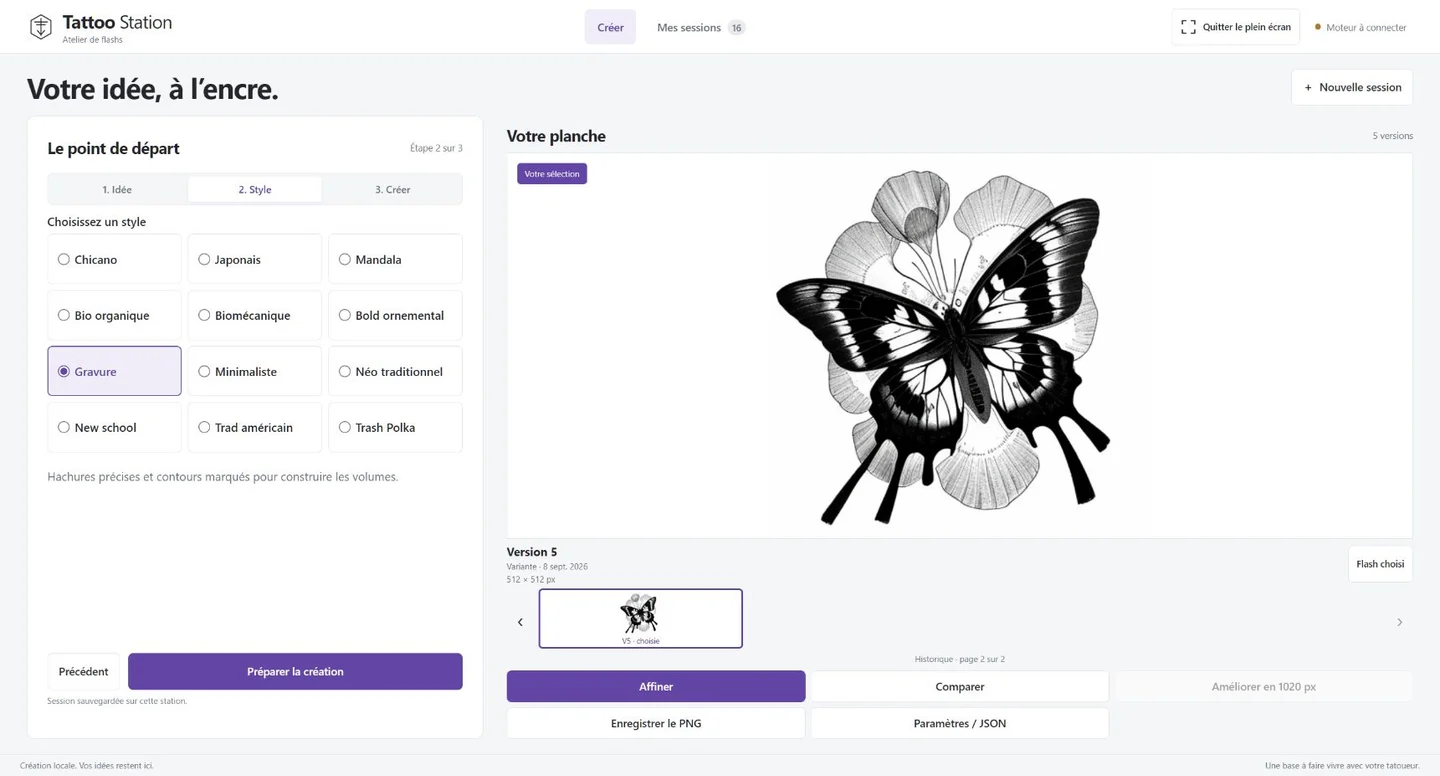
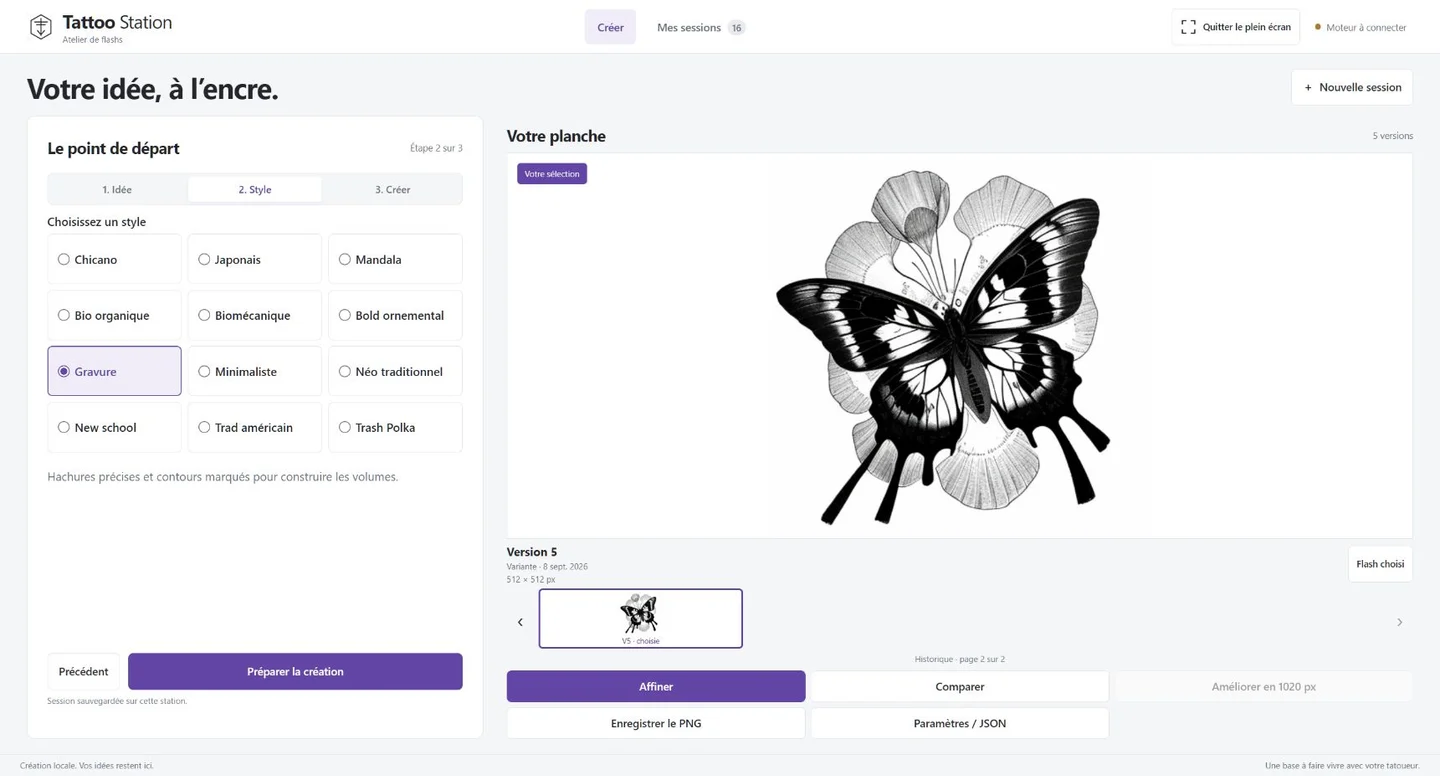
In use · Testing ongoing
Tattoo Station: a local AI application
AI image generation, variations and retouching run on the NVIDIA AGX Orin station, entirely locally and offline.
Status on 1 October 2026: the solution is in use at the client’s premises and available to its customers. Testing continues.
Read the project Tattoo StationWhat you receive
- A map of current flows and repeated data entry
- API connectors between tools such as CRM, accounting, ecommerce and hosting
- Scheduled synchronisation, reports and alerts
- Targeted AI integration for extraction, classification or drafting, with appropriate human validation
- Documentation of flows and access used
What this brings you
- Time returned each week without hiring for data re-entry
- Fewer copying errors between tools
- Documented flows so changed access can be traced
When can Oryon help?
- You enter the same data into three different tools
- Weekly processes depend on spreadsheet exports and imports
- Two of your applications should communicate but cannot
- Repeated operations take time every week
How the work progresses
- Observe the tasks and measure the time actually spent
- Prioritise connections by impact
- Deploy gradually alongside the existing process, then switch
- Monitor flows during the stabilisation period
What we need to plan together
- Third-party APIs can impose quotas and costs, assessed before committing
- Automation requires access to the tools involved
Details of the work
Scope and deliverables
An initial useful scope can be synchronising customer records, preparing reports, classifying documents or helping draft content.
Each flow defines its source, destination, validation rules and expected error handling. A human step remains in place when the context or risk requires it.
Integration and migration
We check the APIs, formats, quotas, access rights and terms of existing tools before choosing an integration.
The transition is gradual: test representative data, compare with the current process, obtain team approval, then monitor the launch.
Maintenance and ownership
Flows, technical accounts, business rules and recovery procedures are documented. Secrets stay in administration spaces you can access.
Maintenance covers the monitoring and adaptation to API changes defined in the agreement; any third-party costs are identified separately.
Technologies used
- REST APIs, webhooks, AI model APIs, task queues and TypeScript / Python scripts
Frequently asked questions
Do we need to replace our current tools?
Not necessarily. We first look at connecting the tools that already work for you. Replacement is proposed only when a technical or contractual limit justifies it.
Where is AI useful?
For defined tasks such as extracting, classifying, summarising or preparing a draft. The choice depends on the data, acceptable error level and possible human validation.
What happens if an API changes?
Dependencies and alerts are documented. Maintenance can include flow monitoring, diagnosis and connector adaptations within the agreed scope.
Can you integrate AI that runs locally and offline?
Yes, where the need and hardware allow it. Tattoo Station runs its application and image generation locally and offline on NVIDIA AGX Orin. Choosing local or remote execution depends on the task, models and hardware and is assessed for each project.
Let’s discuss your context
Three tasks that take time each week are enough to start.
Based in Givors, in the Rhône area, Oryon supports projects remotely across France. On-site work is considered for each project. Project discussions take place in French.
Complementary services
Continue preparing your project
- Automation
Automating business tasks: choose a first project
A method for choosing a repetitive task, describing exchanges between tools and testing a first automation against concrete criteria.
Read the guide