Tattoo Station is a custom application for preparing tattoo designs with AI assistance. The whole solution runs locally and offline on NVIDIA AGX Orin: the interface, image generation, variations and edits execute on the station without requiring an internet connection.
The solution is in use at the client’s premises and available to its customers. Testing continues in use, with further work on the journey and available editing options.
Turn an idea into a visual proposal
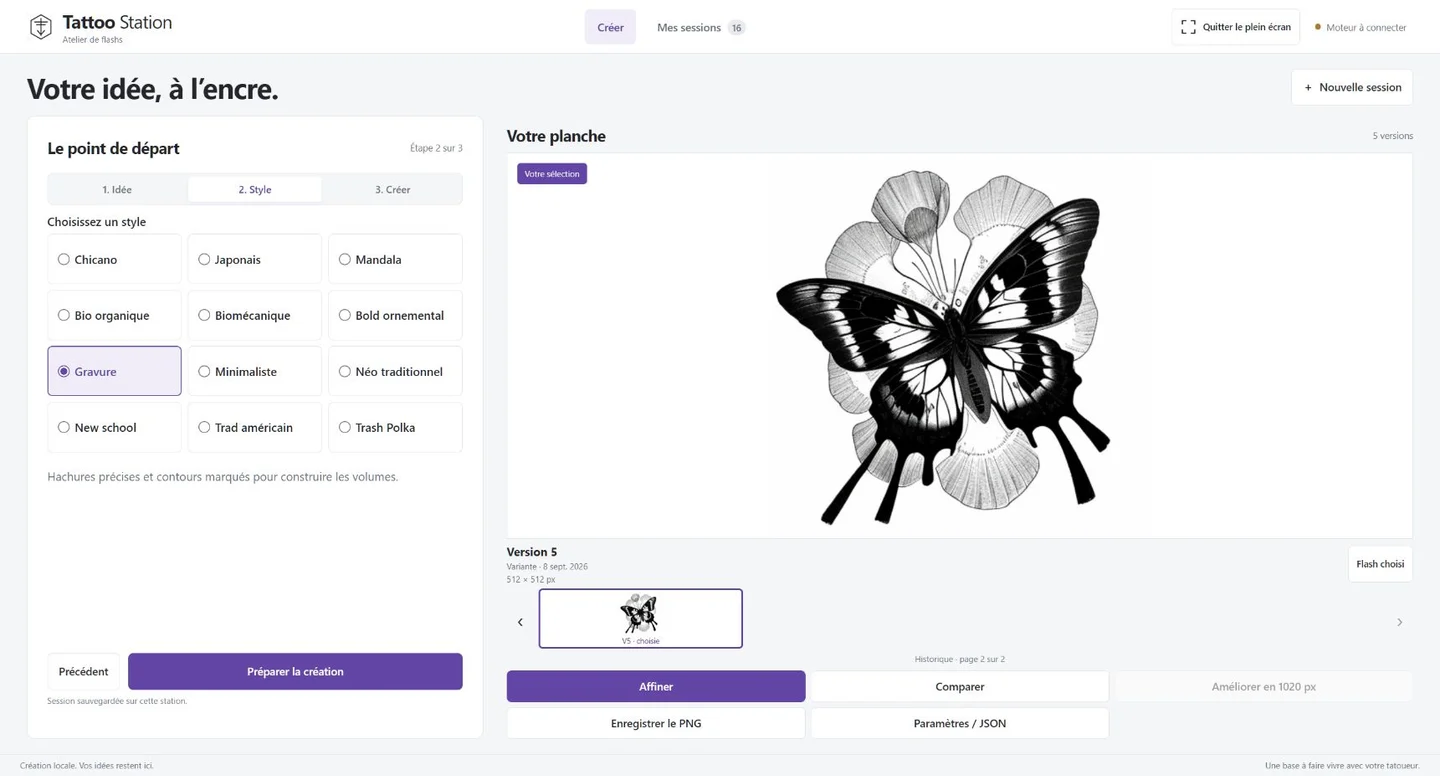
The developed scope includes entering a request by text or voice, selecting a style and preparing a generation. These elements structure the initial idea: a subject, a visual direction and the details needed to work on the design.
The application brings these steps into one journey. The generated proposal supports the discussion; the tattoo artist retains artistic control and adapts the drawing to the tattoo project.
Develop a design while keeping track of the work
Development includes version management, variations and editing a selected area through a mask. These operations serve different needs: exploring another proposal or changing part of an existing design.
Checks cover the starting image, the area passed to the editing operation and the result displayed. Tracking these elements helps explain changes between versions and identify edits that do not match the request.
Run the entire solution locally and offline
The NVIDIA AGX Orin station runs both the application and generation engine on site. Offline operation makes the creation journey independent of a remote generation service.
Combining application development and AI integration supports concrete tasks: submit a request, find a version, prepare a variation and check an edit. Tests identify behaviour to correct and improvements to prioritise.
A service already available, with testing continuing
As of 1 October 2026, Tattoo Station is in use at the client’s premises and available to its customers. Availability is accompanied by an ongoing testing phase.
Deployment is distinct from outcomes still to be measured. This case study reports no quantified time savings, satisfaction rate or sales increase. Usage feedback and verified observations can add to the case as the project progresses.